It’s Only When You Look Back
Four decades at the keyboard, 25 years of it published here
Updated:
Discussion on lobste.rs Discussion on Slashdot
Last month, this website passed a pretty big milestone: it’s been online for over 25 years (since Tuesday, May 29th 2001 - a few days after I finished my university finals exams), making it my online home now for my entire professional career. All along, I’ve been creating content and documenting my various projects and interests of the time, which has turned it into something of a personal time capsule. All of which makes this feel like the right moment to stop and look back at the archived history of this site, my online presence and tech trends that have come and gone. This is going to be a bit of a long (and sometimes embarrassing) one, but I think I’ve earned a little indulgence!
Firstly: No, I’m not going to mention AI. That’s a topic for another day. Secondly: I have spent a lot of time putting this article together, digging out the old screenshots and trying to make sure my memories align with the correct events. But bear in mind this is a look back over many decades of personal, website and tech history - so it’s possible my recollections may be a bit off. Friendly corrections welcome!
From Cassettes To The Cloud
When I do stop and think about how much the world has changed, and what we now for take for granted, it really sinks in. I first started writing code about 40 years ago, with my first home computer - a Sinclair ZX Spectrum. I can remember exactly the first program I typed in, as I still have the manual. To put things into perspective, here’s the juxtaposition of what my first lines of code would have looked like - typed carefully into a squishy rubber keyboard plugged into the family TV - alongside my current 2026 Ruby On Rails dev setup and my latest project:
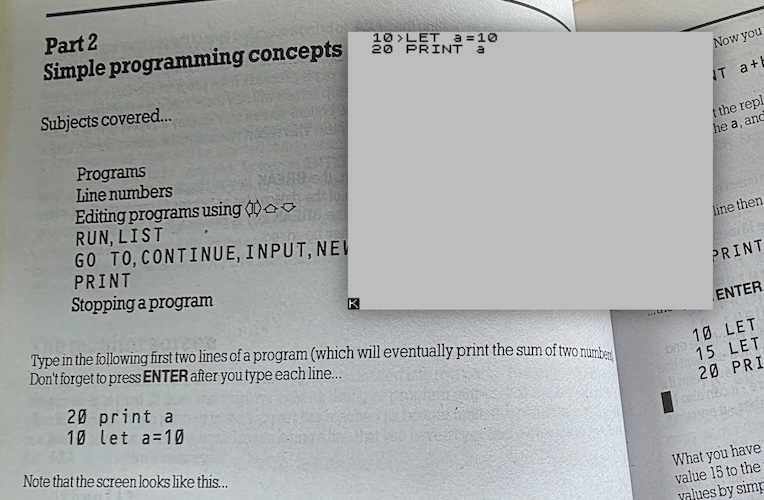
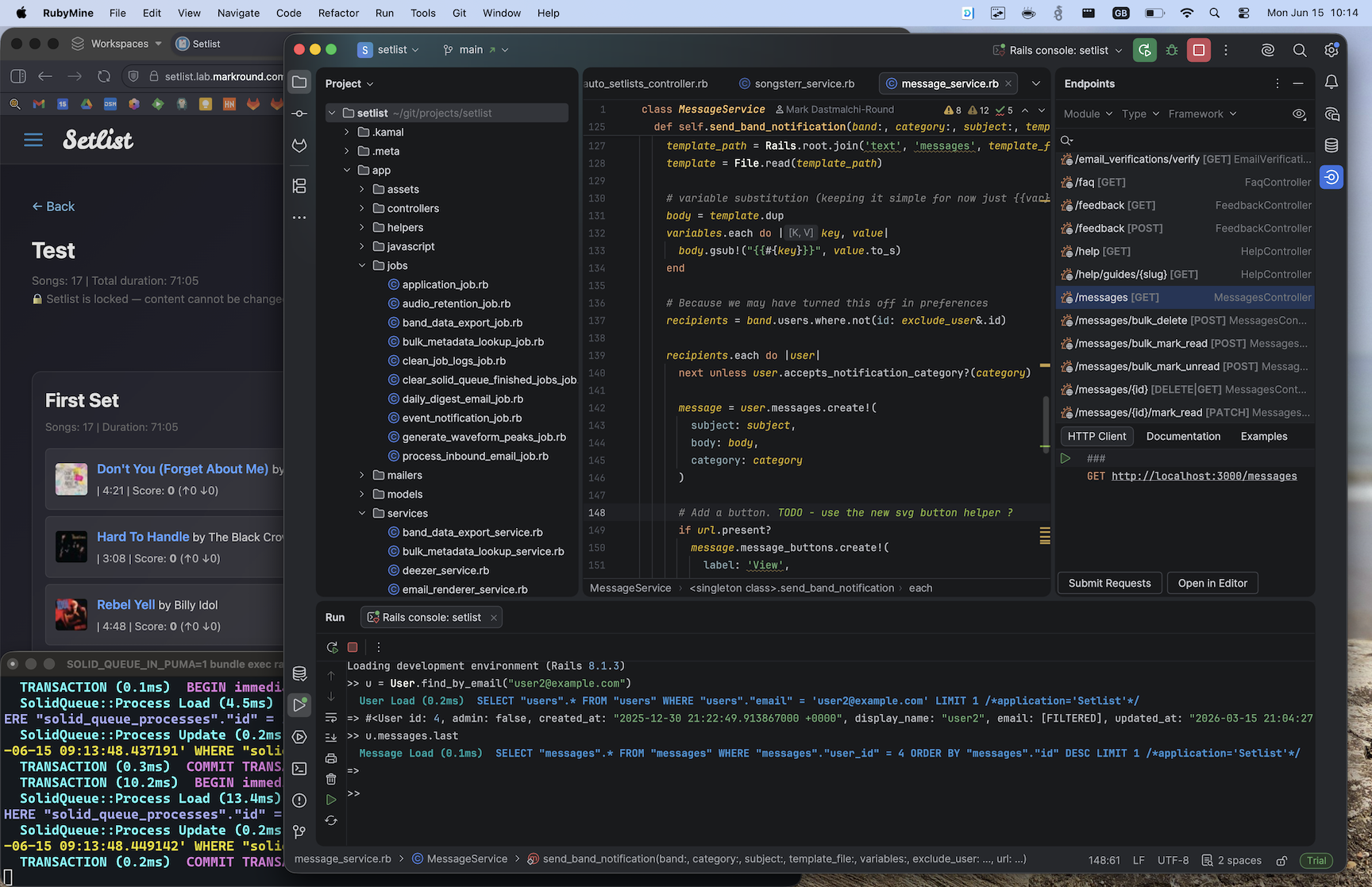
In my lifetime so far, I’ve gone from an 8-bit 3.5Mhz computer with 48KB memory, to my current laptop (Apple MacBook Pro) that has nearly 400 thousand times the memory and runs millions of times faster. And that’s just my laptop - Looking around my homelab, one of my refurbished systems (an old HP workstation) has 112 threads at 2Ghz and 1TB memory! I’ve gone from a 1,200 baud modem calling BBSes to gigabit fibre internet; from cassette tapes and floppy disks to NVMe drives for storage; and from being the only kid in my street with a computer to genuinely losing count of the number of devices I own that qualify for that term. Phones, personal and work laptops, tablets, old devices sitting in the back of a drawer, “smart” TVs, Raspberry Pis… Not to mention my old retro systems I still have.

A Different Kind Of Soundtrack
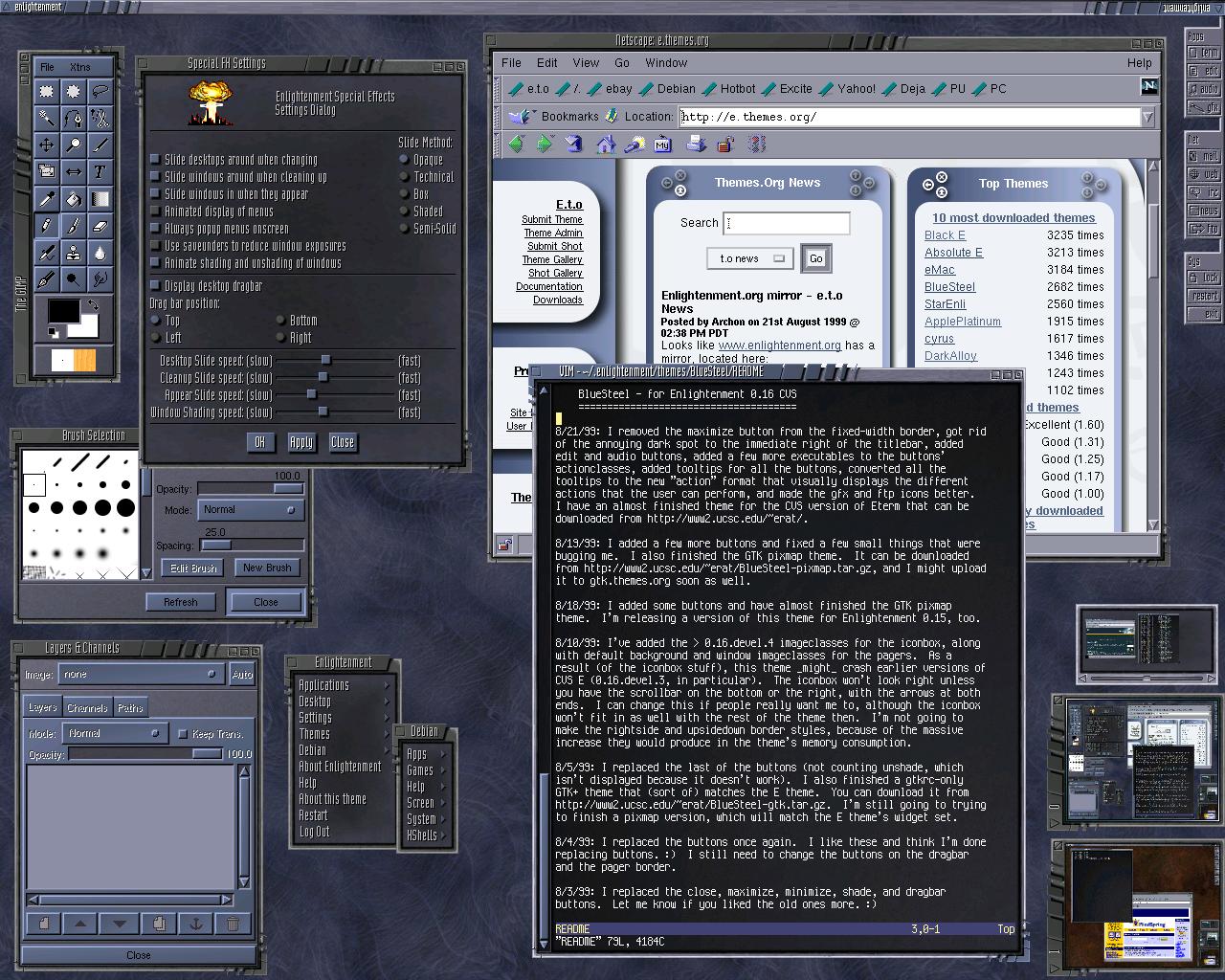
 As this site and it’s predecessor have been online since the late 90s, I’ve seen tech trends come and go and have worked on some really fun stuff. Thanks to archive.org and my own snapshots and backups, I’ve managed to go back through the years and build up a timeline of all the different technology eras. It’s kind of a “Website CV” and tour through the technolgies and cultures of the day, starting from my first dabblings in hand-crafted HTML to the modern cloud-native world. It’s brought back a lot of memories as well as some decidedly cringy photos and website design…
But first…
Pre-History
My digital footprints extend even further back: As well as getting me started on my computing journey, my very first computer also established my first pre-internet on-line presence. Fuelled by endless re-watchings of War Games, I’d become aware of the then-burgeoning BBS scene and I eventually saved up and bought this bad boy:
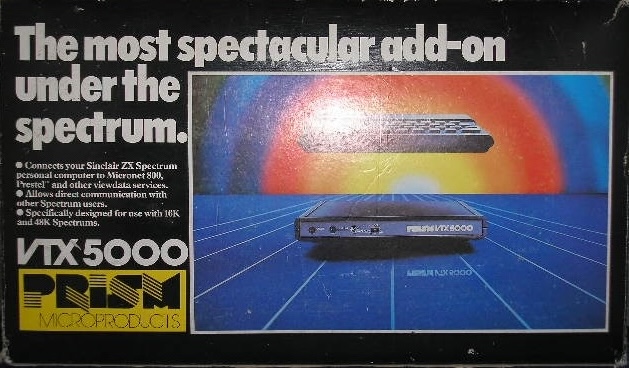
Connected to my 8-bit computer, I got to experience a connection speed of around 0.0012 Megabits/Second in today’s terms! In our modern always-on, always-connected world where we’re tethered to the Internet 24/7, it’s hard to put into words how different the home computing scene was back then. Each computer was it’s own little island, and data transfer was usually carried out by copying tapes (and later floppy disks) and swapping them in the school yard. With a modem, I got to explore the local BBS scene and was the first time I experienced that feeling of being connected to actual real-life people across the void, albeit with identities closely guarded behind cryptic handles. I’ve even found old archives of these BBS systems from back then and a few of my old logins still even work!
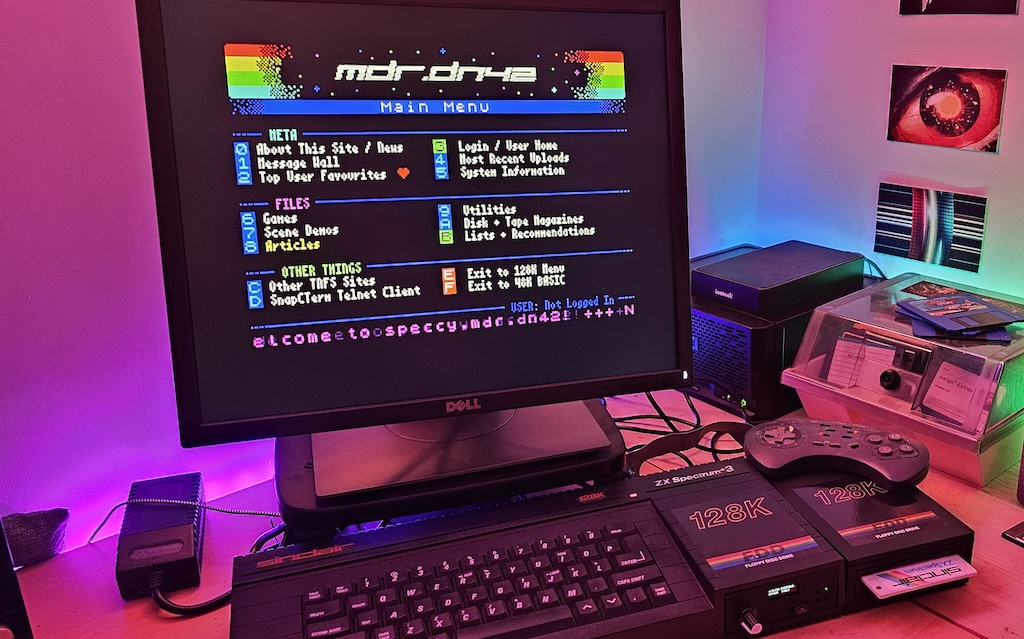
My own TNFS Site is one of my recent projects that aims to re-create that magic I felt back then, and it’s been a real blast seeing users logging in and leaving messages on something akin to the BBS sites of old.
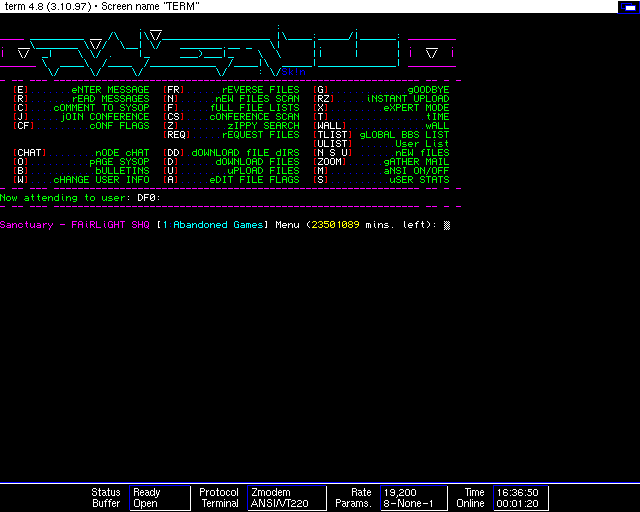
I’d started hanging out on bigger, more well-connected boards (many of which still exist today!) although my funds only initially stretched to a 9600-baud modem. I’d heard mention of this mysterious “Internet” thing, and some of the larger boards of the time offered a gateway to access services like FTP and Telnet. Magazines had just started mentioning the Internet and including enticing FTP URLs and some even had a “website” - whatever that was. Problem was, in addition to the phone bills and costs involved in signing up with one of the early ISPs, my Amiga would have had required upgrades beyond my budget and towards the end of the 90s I could see the writing on the wall for the platform.
Although I even now still write and release software for my Amiga, I was heading to university, and had to begrudgingly jump ship to a more industry standard PC platform. I was moving into shared accommodation at the time, and had to leave my modem behind but that didn’t matter - the University had an incredible, proper connection to the Internet with speeds that were measured in (single-digit) actual Megabits/second.
University
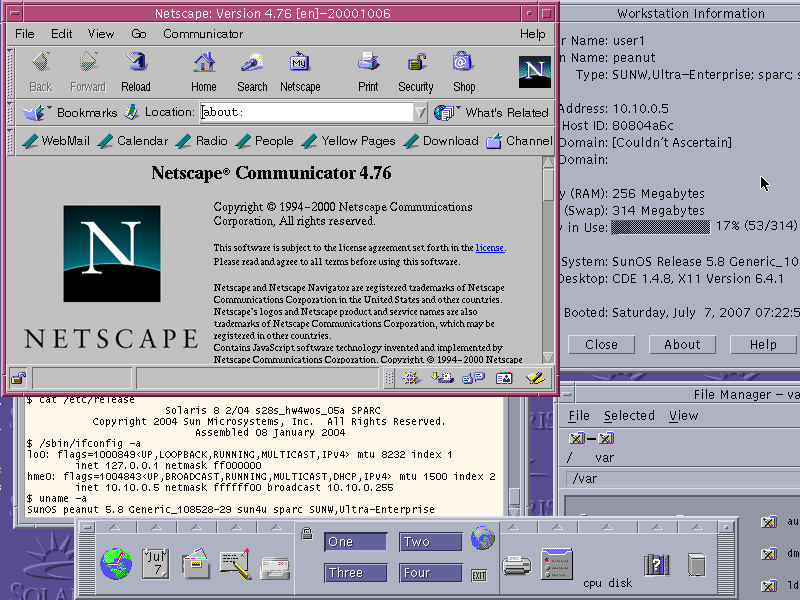
It was a pretty pivotal moment for the Linux scene - the introduction of the 2.2-series of kernels and distros like RedHat 6.x meant that people were starting to take Linux seriously, although the die-hard Solaris snobs were still saying that “Linux couldn’t scale” and it was a mere toy operating system. I vividly remember during my work placement year sneaking in Linux “through the back door”, setting up Samba servers, Apache webservers with mod_perl, firewalls and other infrastructure running on discarded desktop PCs.
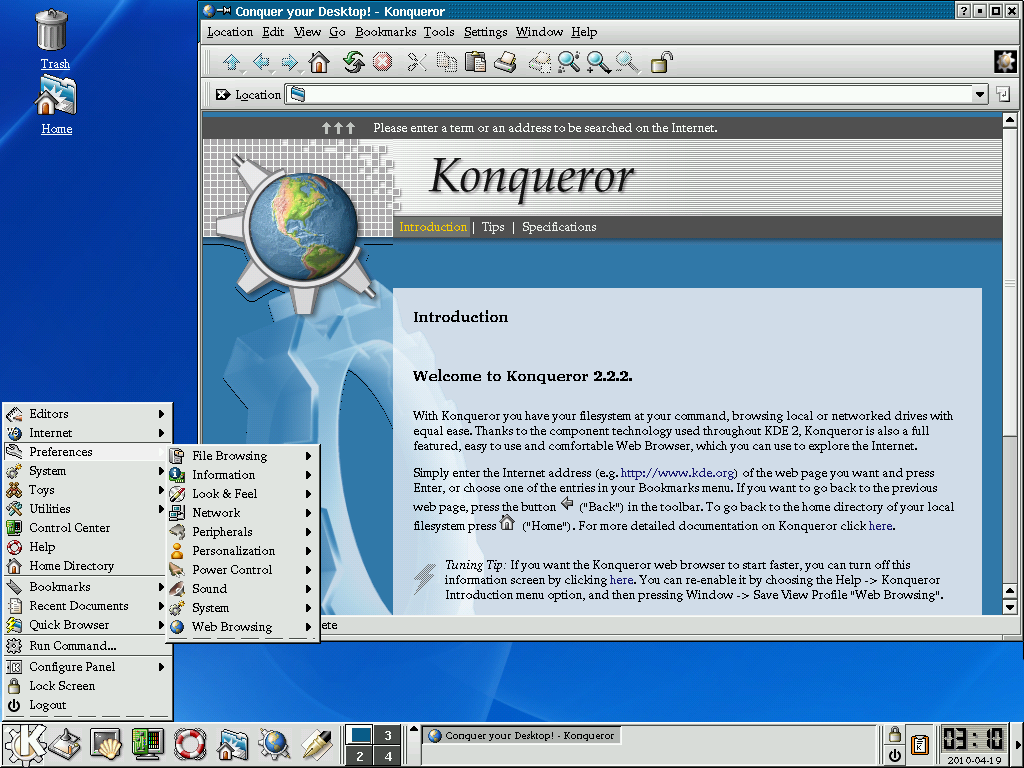
Browser-wise, it was still mainly Netscape or Internet Explorer v4.x. The Mozilla project had started, but the early betas were more-or-less unusable so by the end of my course, I ended up mostly using Konqueror under KDE 2. There was also a big jump in desktop usability at the time, and we also got XFree86 4.x in this period which introduced anti-aliased font rendering and a whole host of other technologies we now take for granted. I remember things like hacking libfreetype with #define TT_CONFIG_OPTION_BYTECODE_INTERPRETER to get proper (patent-infringing) hinting support, and it was just considered “business as usual”. Anyone complaining about Linux font rendering now should take a look at what we had to deal with back then:
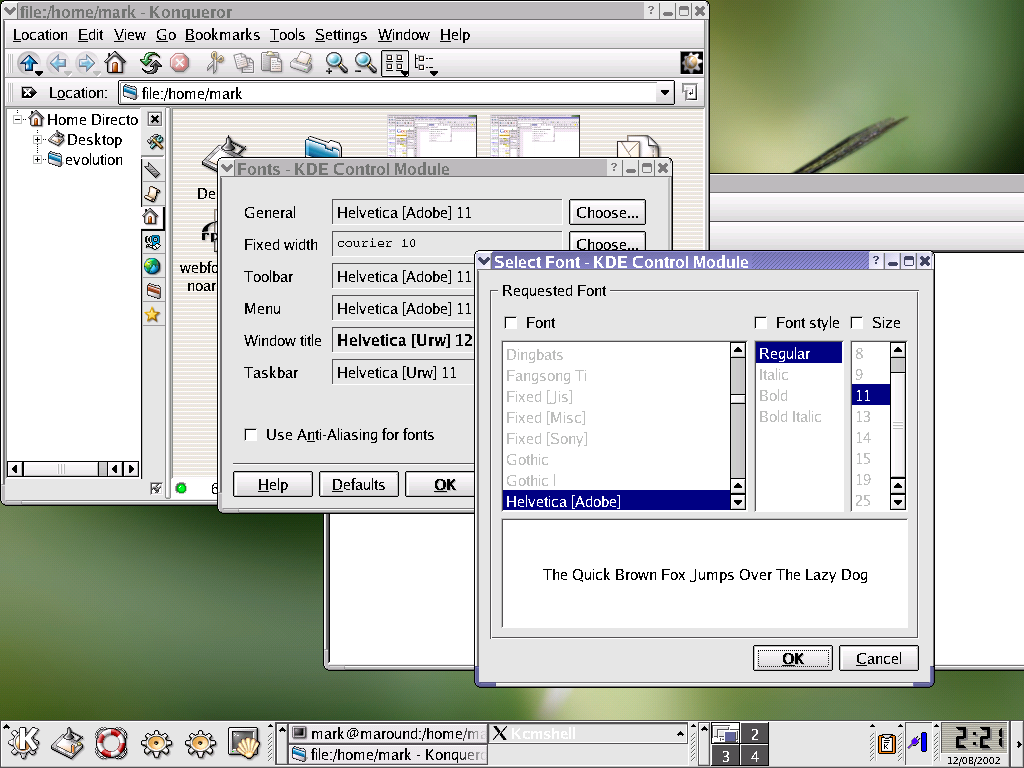
I wote a short guide to fixing things up which was archived in 2002, and from the timestamp in the clock, and the window decorations on my desktop I’d say this screenshot was probably a beta of Red Hat 8.0, or one of the later 7.x series before the Fedora project started. I see Konquerer again running in the background in file-browser mode there; Funnily enough, Konqueror ended up being the browser engine that “won” as it begat KHTML which in turn gave us WebKit / Blink.
The Proto-Web

For software, I remember trawling freshmeat.net for new and updated packages and themes.org for all my desktop customisation “mods”. In the pre-GitHub world, these were usually hosted on random FTP mirrors or if the project was big and “professional” enough, on sourceforge.net. Although binary packages were most often an afterthought, so ./configure; make; make install was still the order of the day for installing things, which lead to a horrendous mess of packaged and non-packaged software all mashed together reminiscent of Randall Munroe’s Python Hell.
I hadn’t yet made the jump onto IRC or other real-time chat although AIM and ICQ were rising in popularity, but I was on a number of early proto-forums including the very early “Linux Coffee Talk” where I found some of my earliest posts archived.
In a true snapshot of the times, one of my earliest posts I could find dates back to Tuesday, May 1st, 2001 (a few days before I registered this domain) and is a plea for help getting a Zip drive working under the newly-released 2.4 series of Linux kernels.
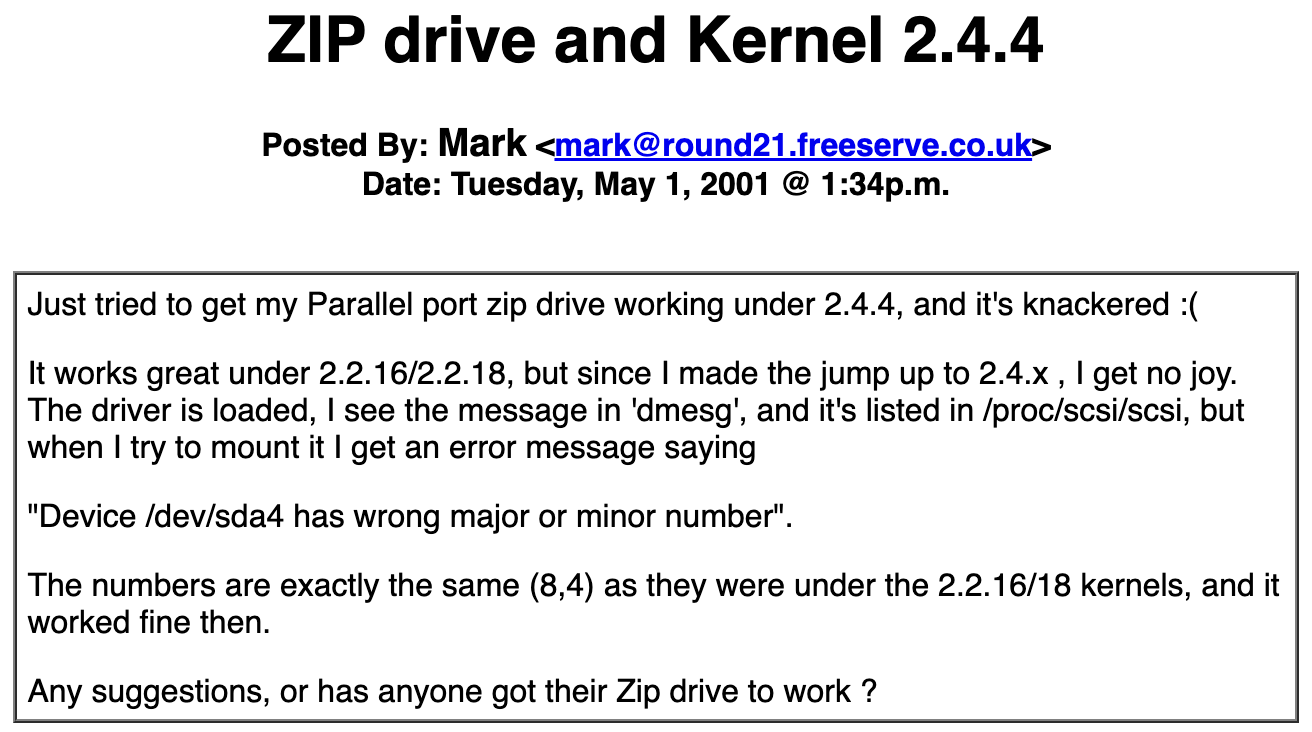
At 19:06 the same day, I posted a follow-up to some replies with:
I’m too tired to do anything with it now though, I’ve been up for 48 hours straight working on my dissertation :(
Oh boy, do I remember that. I read that post and the memories come flooding back; I’m right back there in my squalid student house, wrestling with kernel compilation options on my cobbled-together Celeron 600Mhz/128Mb RAM/Voodoo 3 setup.
My final year dissertation was in effect, a Linux router/NAS appliance distro; a “proof of concept” of a simple to use system to share internet access, storage and so on. It was based on a short-lived offshoot of Slackware Linux called “Zipslack” , and it was delivered on ZIP Disks which I still have, along with the boot floppy (LILO crew representing) and hundreds of pages of print-outs of my Perl code, Linux kernel configuration and boot scripts. The report I wrote included a snapshot of the common tech stacks circa 2000:
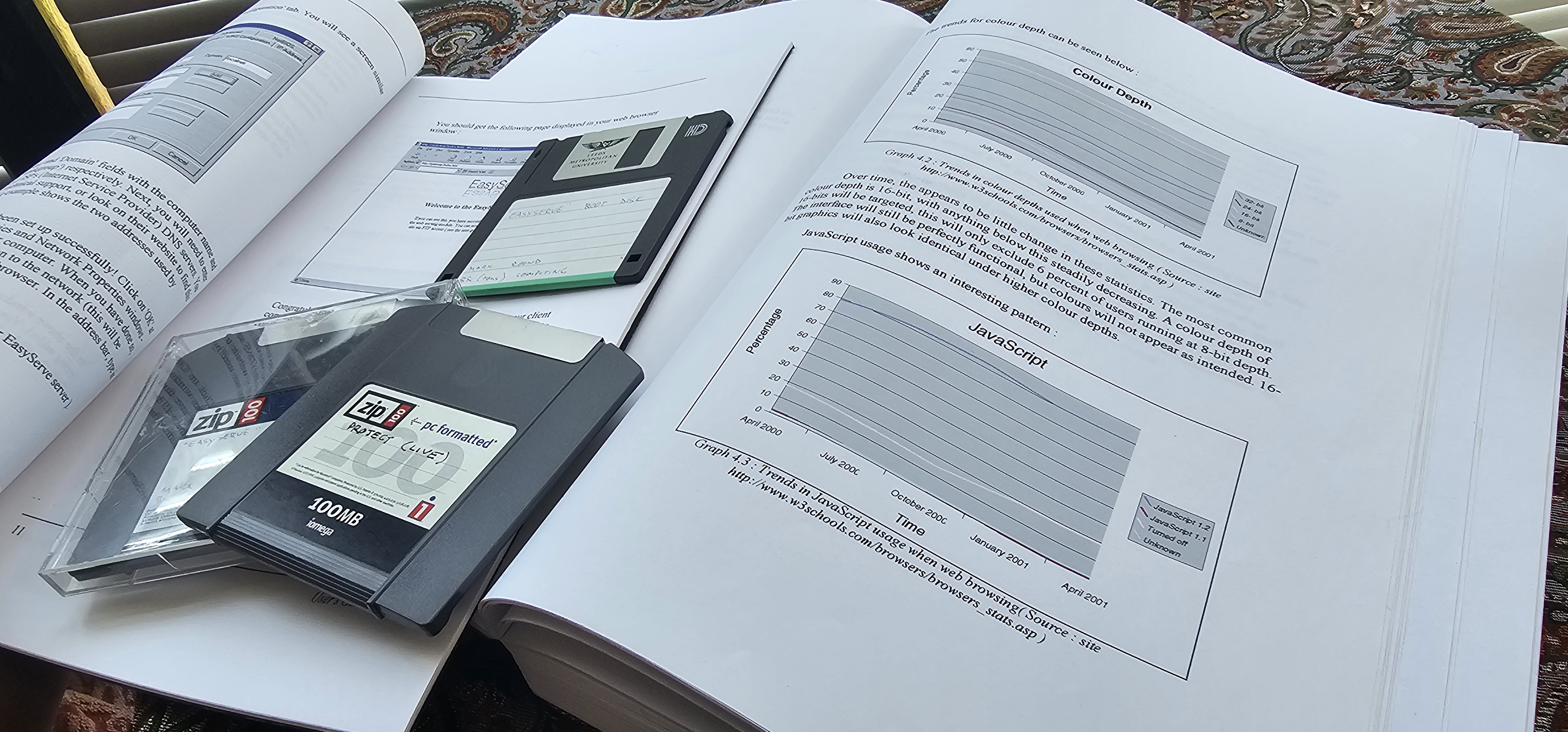
I’d decided to make the admin UI for my project web-based and had analysed the “state of the frontend”. I concluded with the somewhat dating observations that CSS was currently not widely supported enough to consider using, and the best screen resolution to design for was 800x600 in 16-bit colour mode.
The backend was based on standard Perl-based CGI scripts, and although Apache 1.x was pretty widespread, I’d chosen the more lightweight thttpd - apparently it was then the 7th most popular web server in the world, and the benchmarks page for that project show what some of the options were to an late 90s / early 2000s sysadmin. Anyone remember Roxen, Boa or Zeus webservers?
The Paleolithic Era

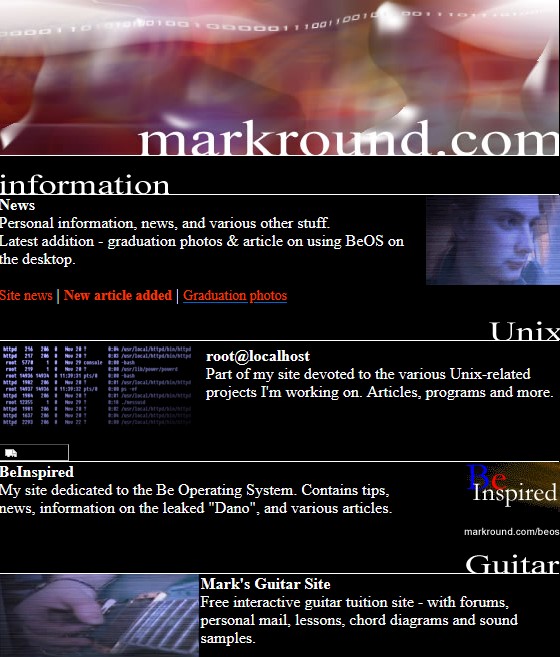
markround.com and set up a PHP-Nuke (remember that?) based site on a shared-hosting LAMP stack.
The newly released PHP4 was then the current hot thing, and by this time the Unix world had largely settled around Apache, although I still came across the odd iPlanet/Netscape server stack at work. Over in Windows land it was all Windows NT-based servers with IIS for everything. Most ISPs and webhosts offered a cgi-bin directory for scripts (yay, FormMail!) and possibly MySQL 3.x.
The site did reasonably well for an early internet project and attracted a small crowd of regulars and guest contributors before I eventually shuttered it due to lack of time, as by then I had started working full-time as a Unix sysadmin/Webmaster/Java developer and the heady days of university were behind me.
root@localhost
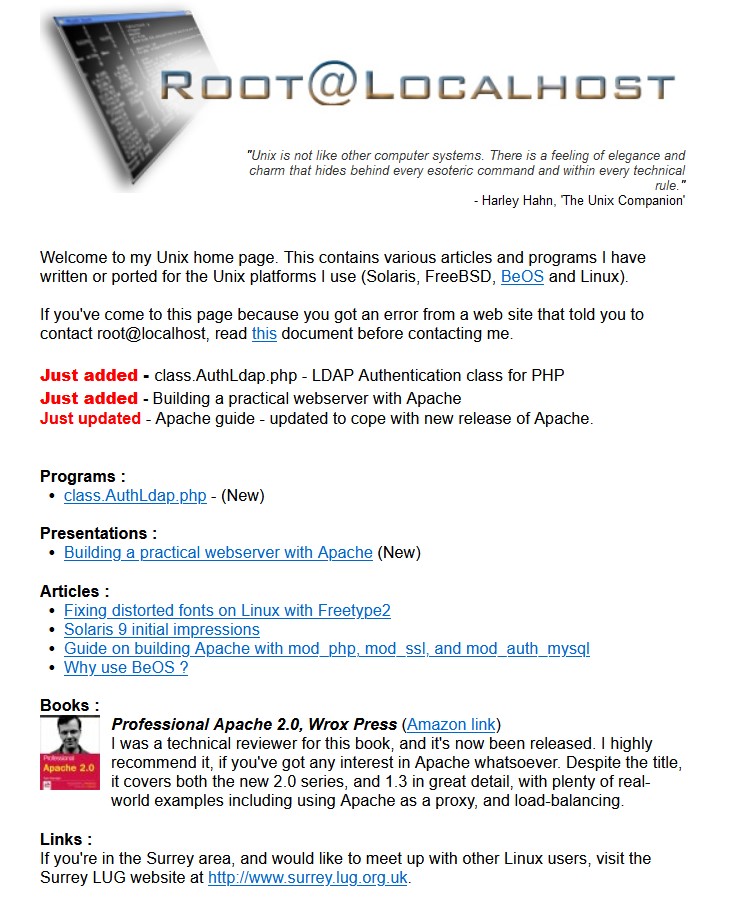
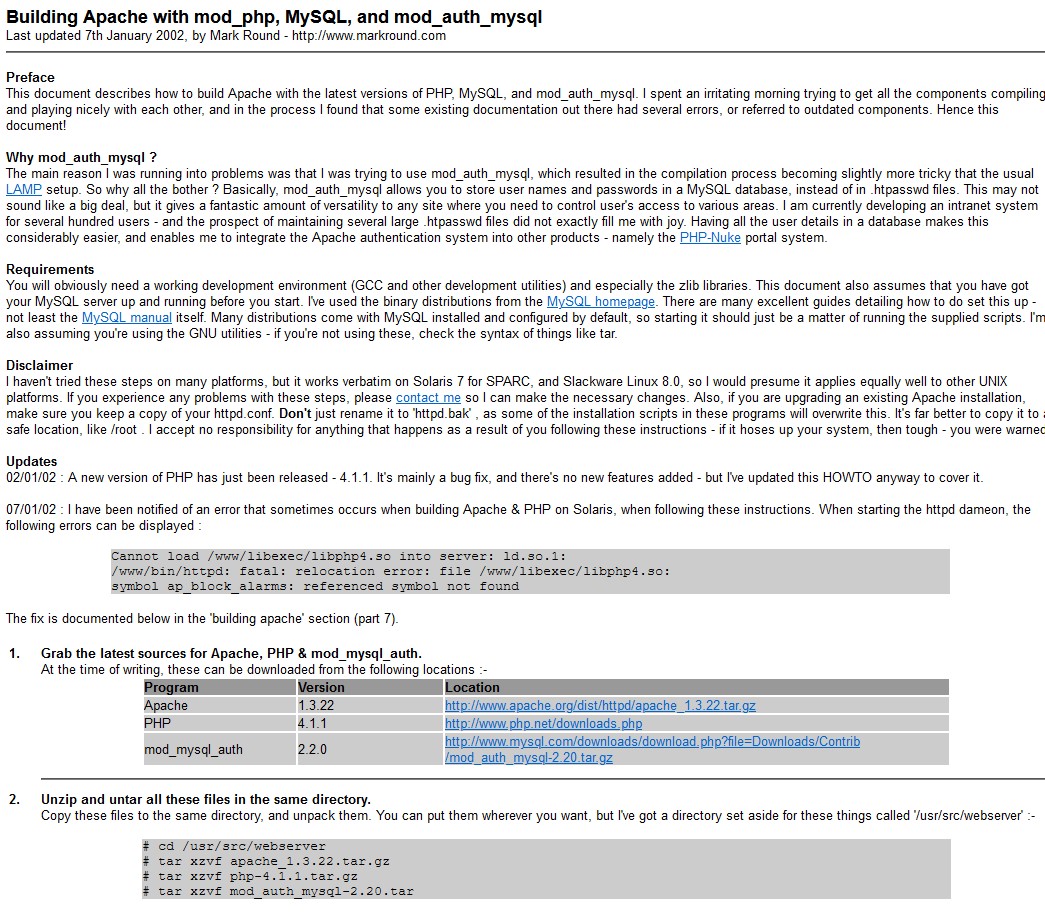
It was around this time that I made my first ever open source contribution - a PHP 4 class for handling LDAP authentication. While it’s truly terrible by my standards today, it was the first time I ever received feedback and even improvements to the code from a user by email. Remember, this is all before git & “pull requests” (I think I had started using CVS at this point) and was a big boost to my confidence. It also helped convince my boss at the time of the value of open source - at the time, it was only just going mainstream (not helped by Microsoft’s “Linux is a cancer” FUD) and a lot of upper management still seemed distrustful of it. Still a little crazy though to see that not only is my class still hosted in the same place, but there have been 43 downloads this week for something written in PHP 4 and abandoned 23 years ago!
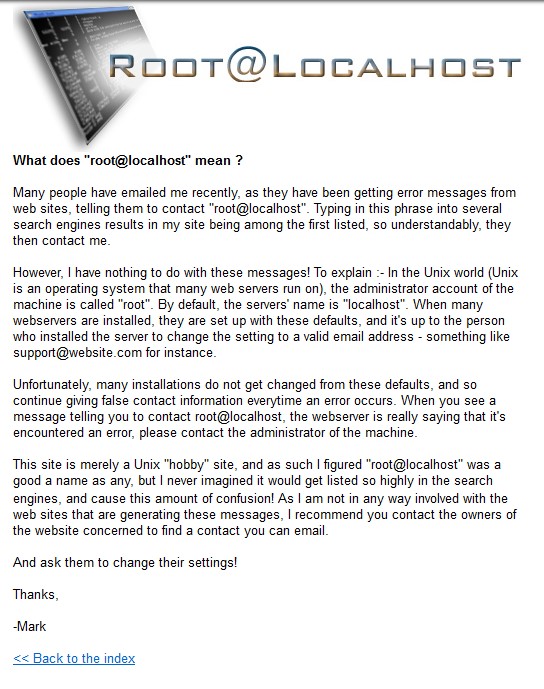
One hilarious side-effect of having a site that at the time ranked very highly when you searched for “root@localhost” was that I ended up getting a ton of emails from people I’d never heard of asking for help with random error messages. The default contact email address shown on error pages for the Apache webserver was root@localhost. Lots of sites back then didn’t bother to change the defaults, so when a user saw a page-not-found error on a website, they saw contact root@localhost for support, would chuck that into Google and land on my page. I had to include a “really, I have nothing to do with this, and no I did not break your webserver” page to explain it all.
Digital Badger
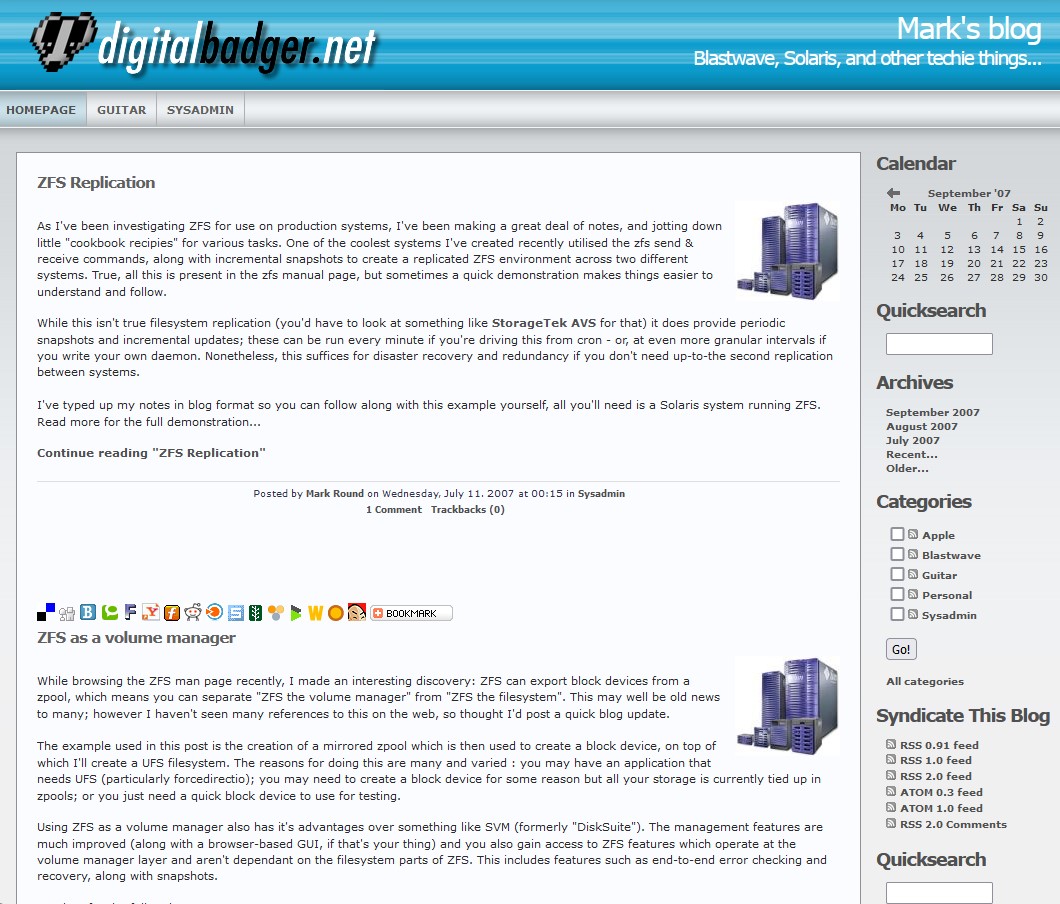
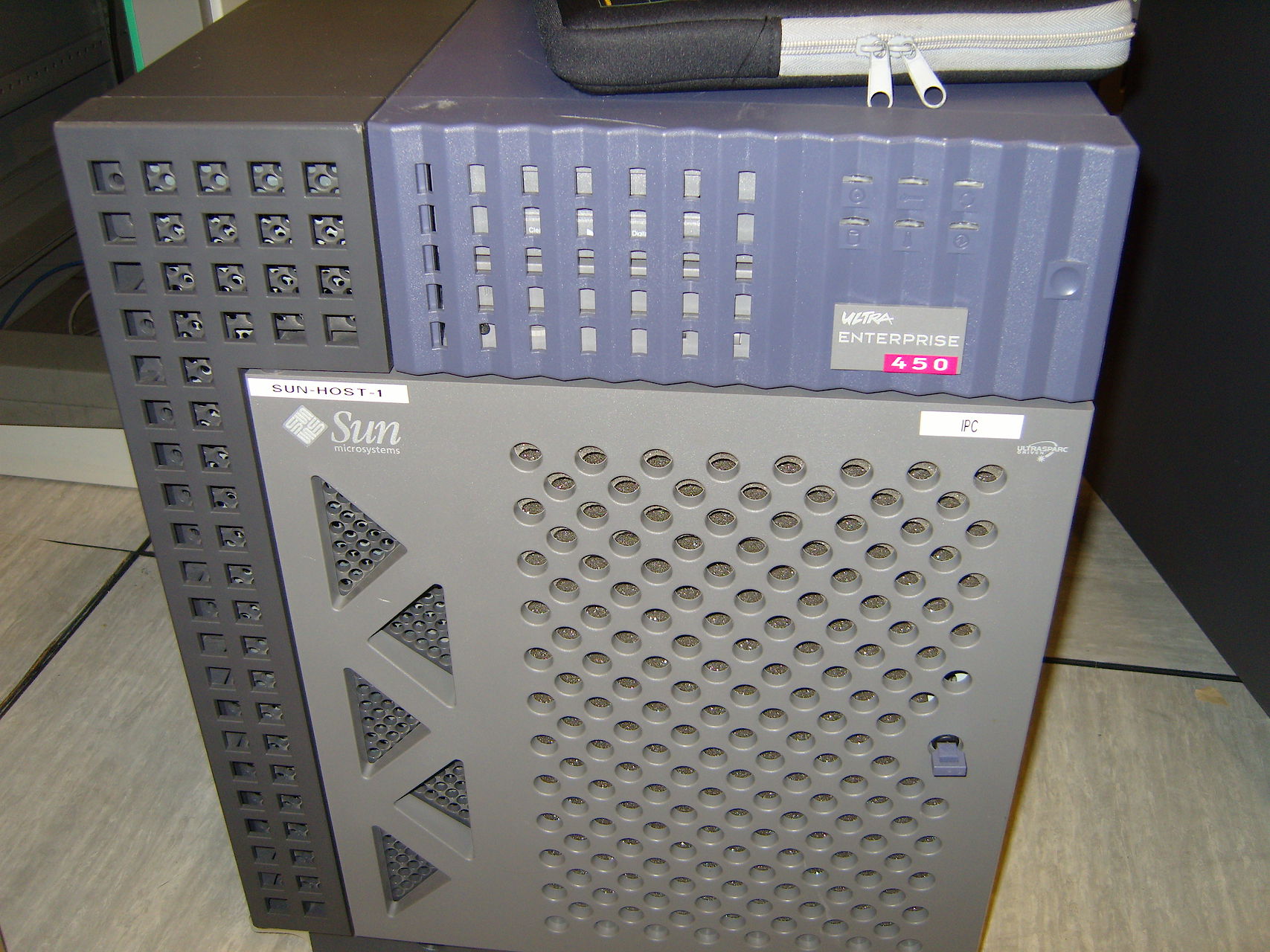
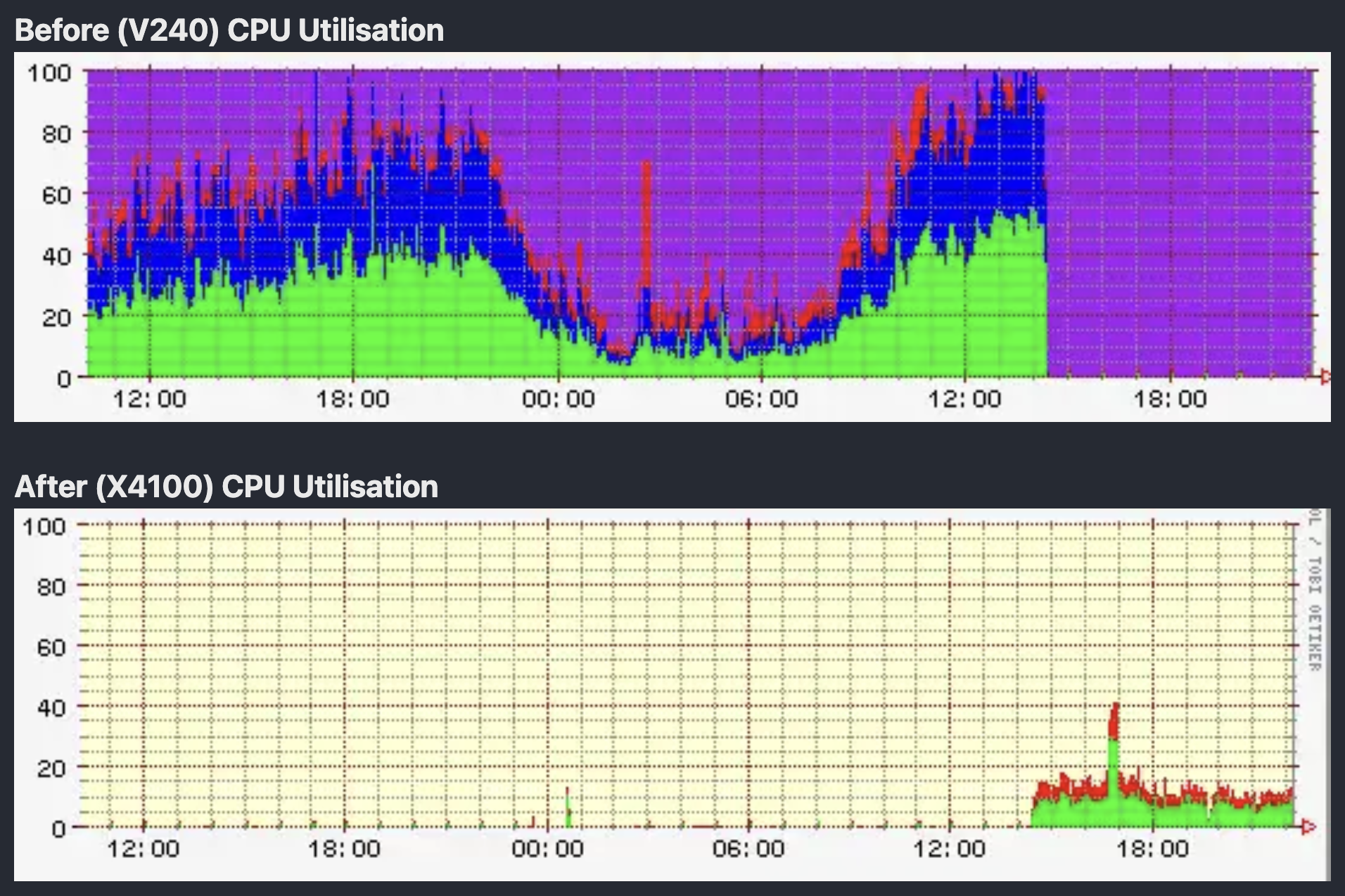
This website was by then on it’s way to a well-established blog, so I’d switched from hand-written HTML in Dreamweaver to a series of dynamic backends again using the then-standard LAMP stack. I eventually ended up settling on Serendipity, which remained the engine behind the site for many years. During that time it followed the trends of the day: I went through many Linux distributions from CentOS to Debian to Ubuntu when that became A Thing; PHP and MySQL upgrades; caching layers, and also a few different webservers including Lighttpd. It was hosted on a series of Solaris and then Linux servers, went back to plain old www.markround.com, eventually became virtualised on Xen, and then moved into the cloud.
I still keep the www. part of this domain and include a redirect from the apex domain back to www.markround.com. Partly because I want to keep as much of my content under the same URL structure as it has for the last 20-odd years, and partly because I kinda like the nod to the past where the World Wide Web was new and trendy and everything was “www” something-or-other.
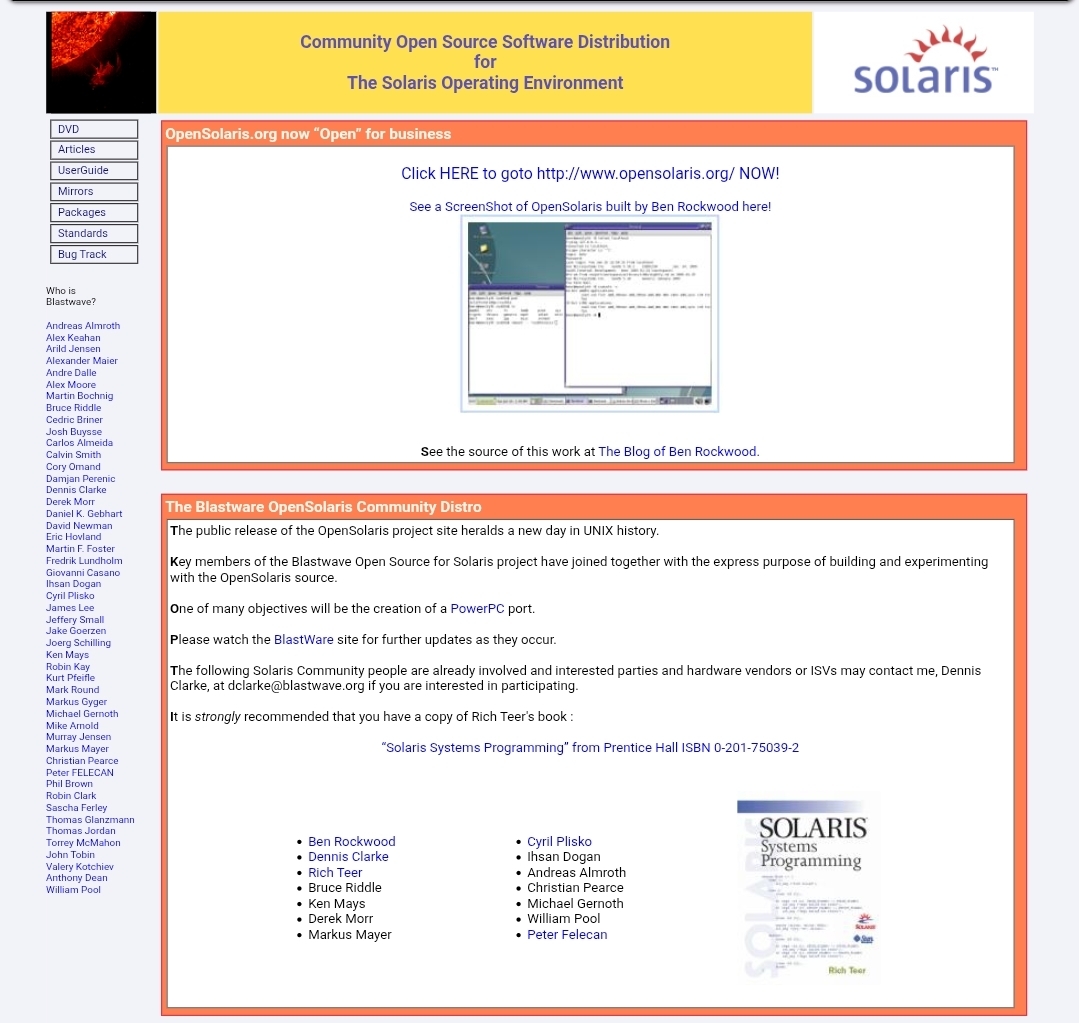
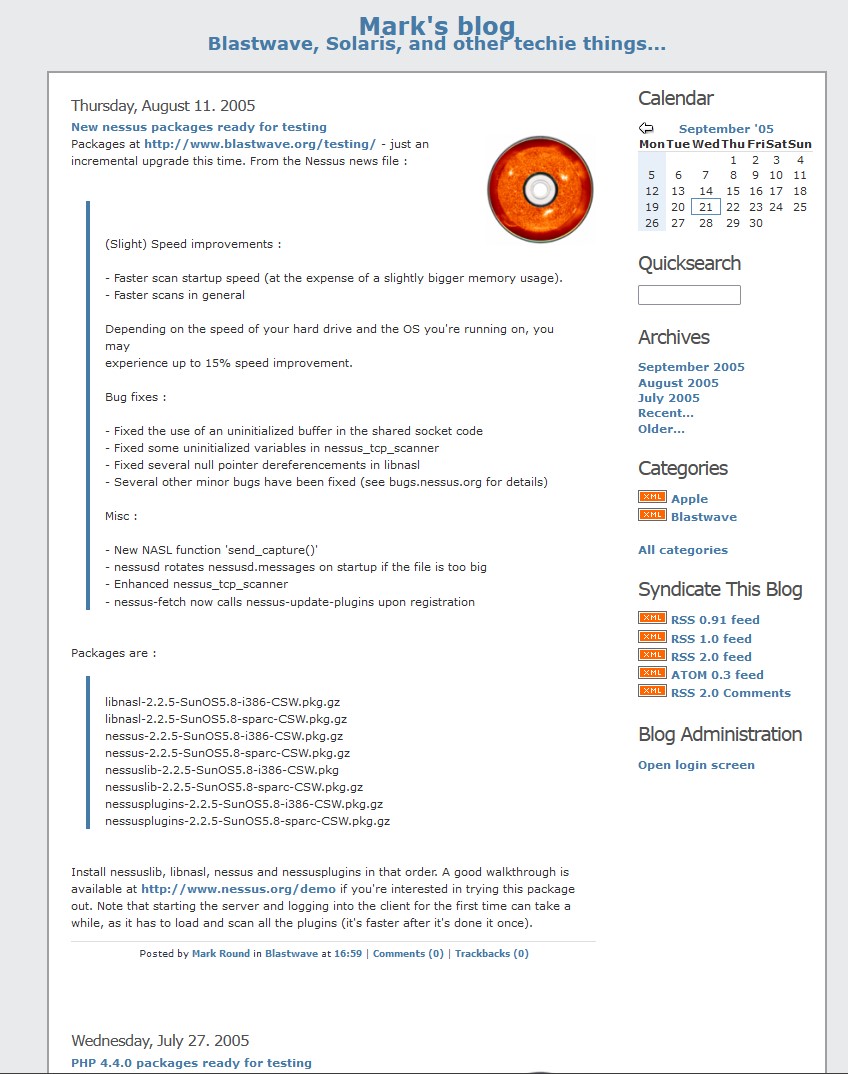
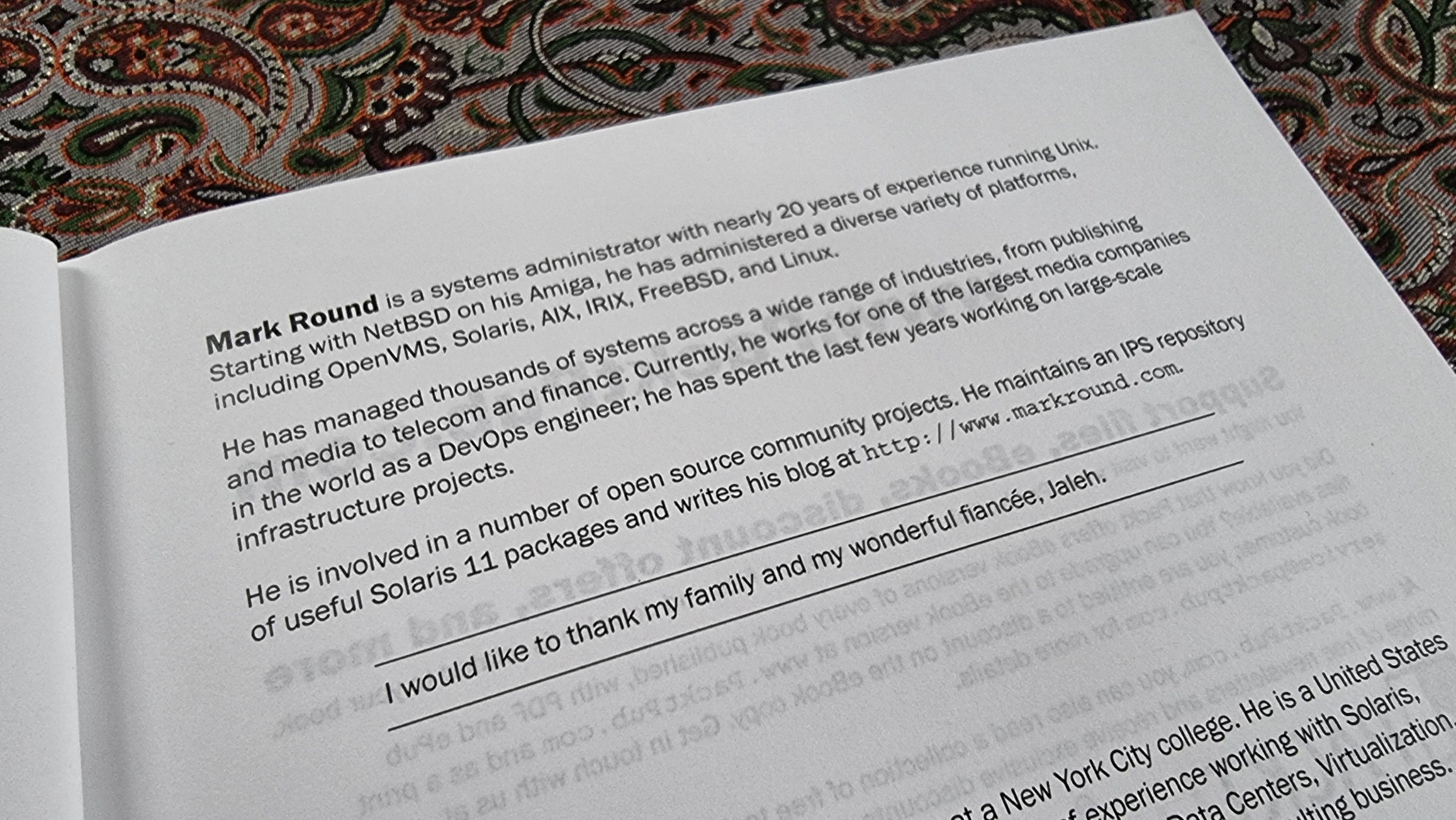
The Age Of Enlightenment
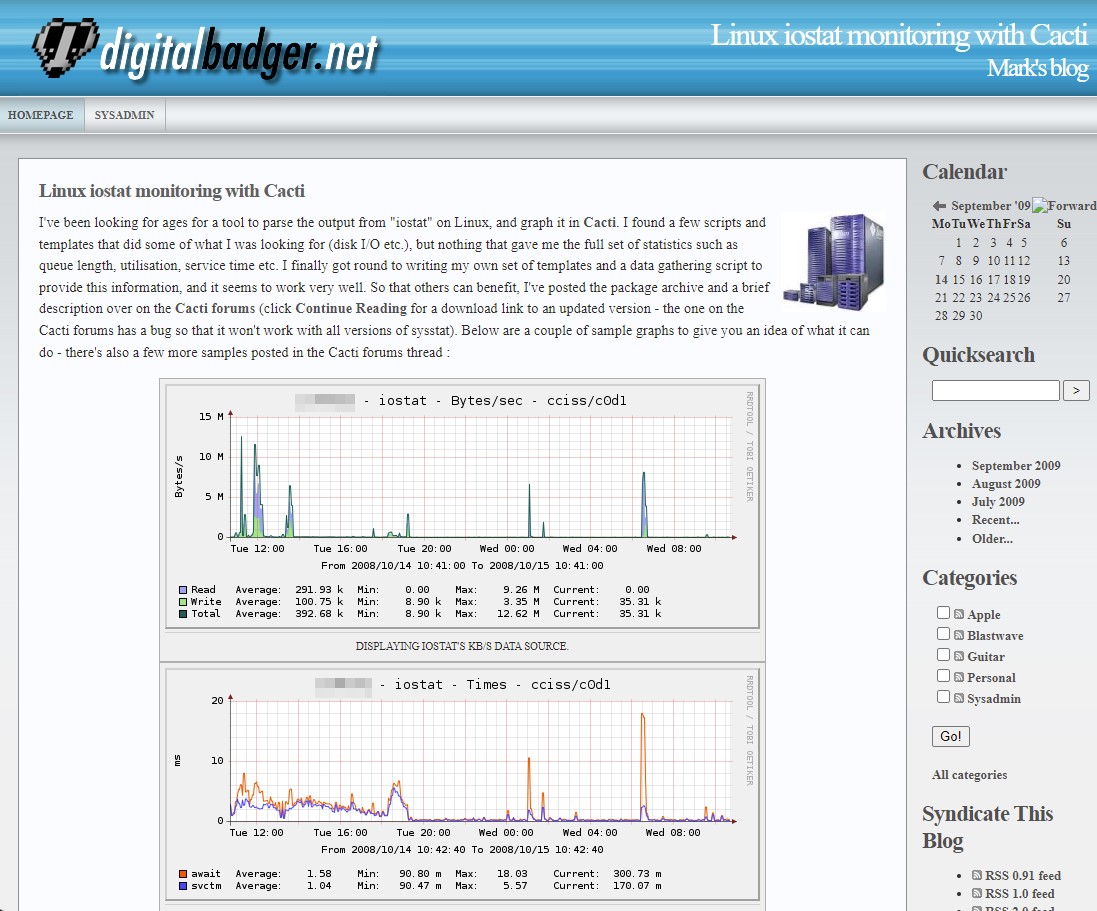
Modern Civilisation
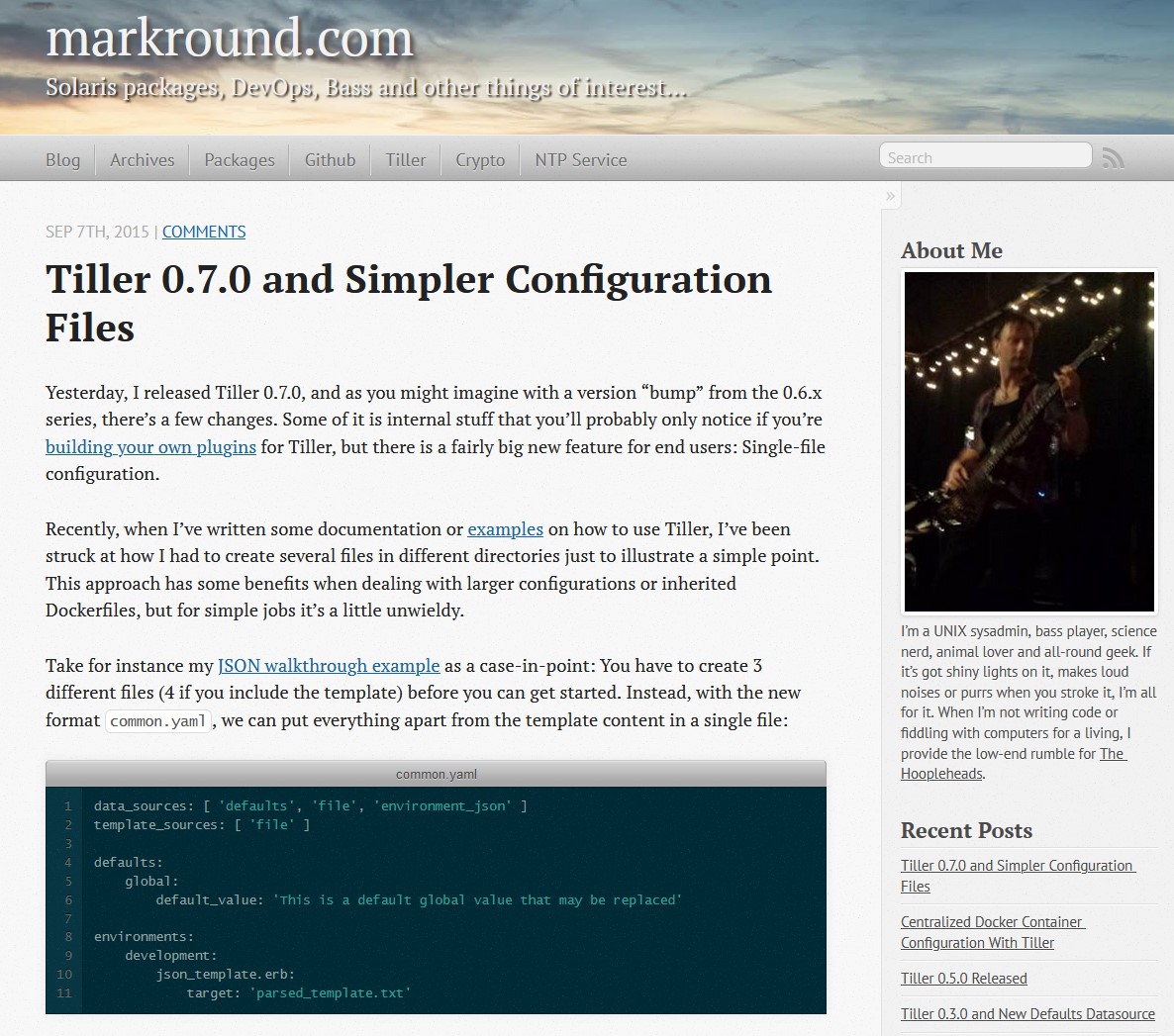
Anyway, Docker was now the hot new thing (although Kubernetes was just barely out of being a new research project and anyone serious would be using Mesosphere). While this site was by then running happily under docker-compose, I’d started to have a few issues moving non cloud-native software into a containerised world - old in-house or 3rd party applications that were the very antithesis of 12-Factor apps. And back then, you weren’t always guaranteed to find a convenient image for your open-source package of choice, either.
So I wrote Tiller. It was admittedly small fry in the terms of open source projects and stalled some time ago but it’s still managed to (at the time of writing) hit 309,110 downloads from RubyGems, acquire 322 Github stars, have 11 pull requests from other developers merged, and over 2,000 lines of documentation written plus it’s pretty much all I blogged about then.
It’s also the period when my music really started picking up. I started gigging again and produced my first few tracks. That photo of me on the sidebar is from my first gig with my friends when I lived in Surrey. Good memories.
AMIGAAAAAAA
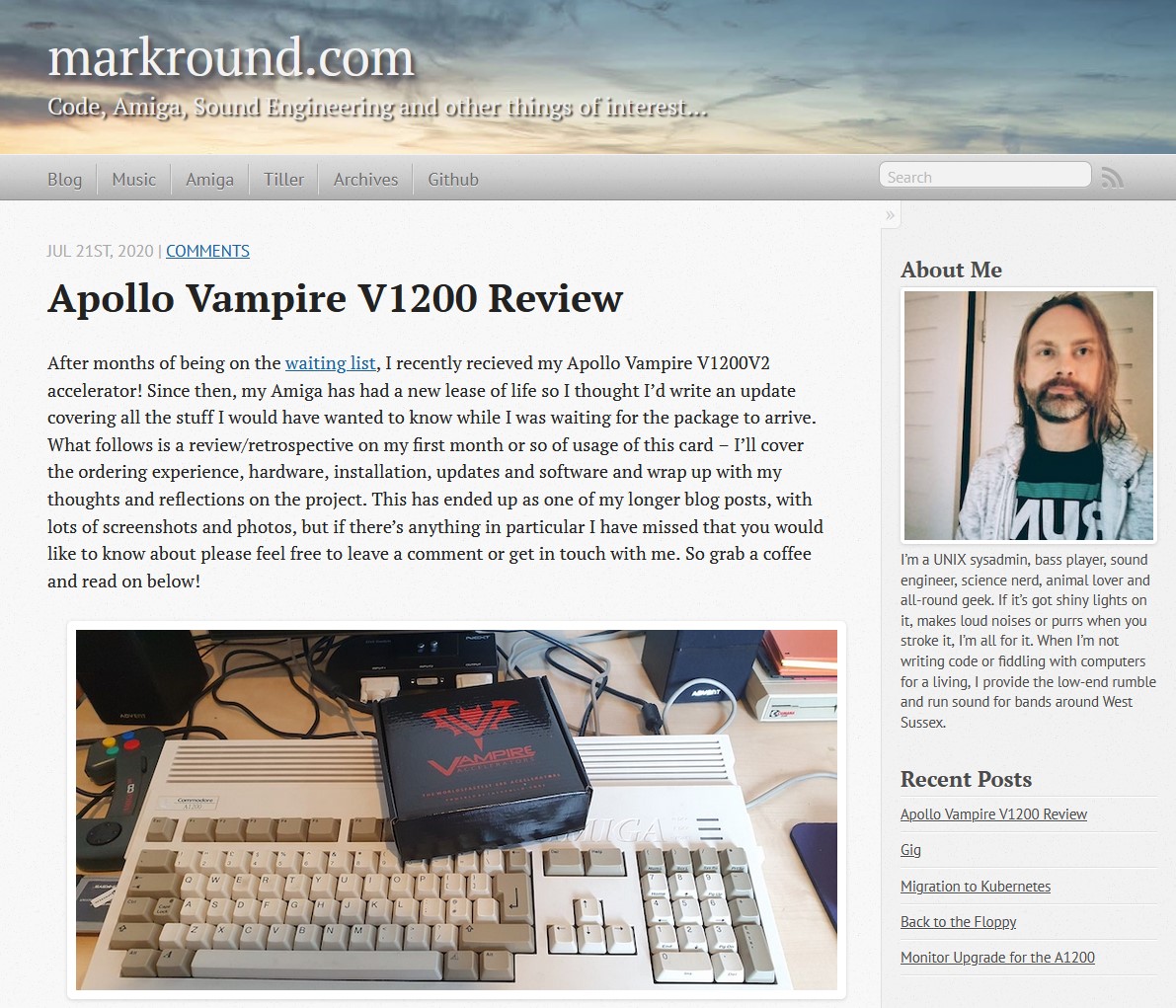
As well as a bunch of more technical articles on the next-gen AmigaOS 4, I also ended up re-learning C and wrote a system utility called SetCmd which I’m now porting across to the classic 68k-powered Amiga OS. And something really cool happened as well with my music, too. I made a rock cover of an old Amiga demo tune, and it ended up getting shown at a demo conference!
The Current Day
At home, I saw the first wave of 8 and 16-bit home computers give way to the IBM PC, and at work I’ve seen the IT world shift from a pre-virtual machine world where commercial Unix ruled supreme, to the modern cloud-native tech world. I do occasionally miss the days where I could describe my job as WEBMASTER with a straight face - and table-based layouts with spinning GIFs were the cutting edge on the frontend - but the stuff we can do today is just incredible.
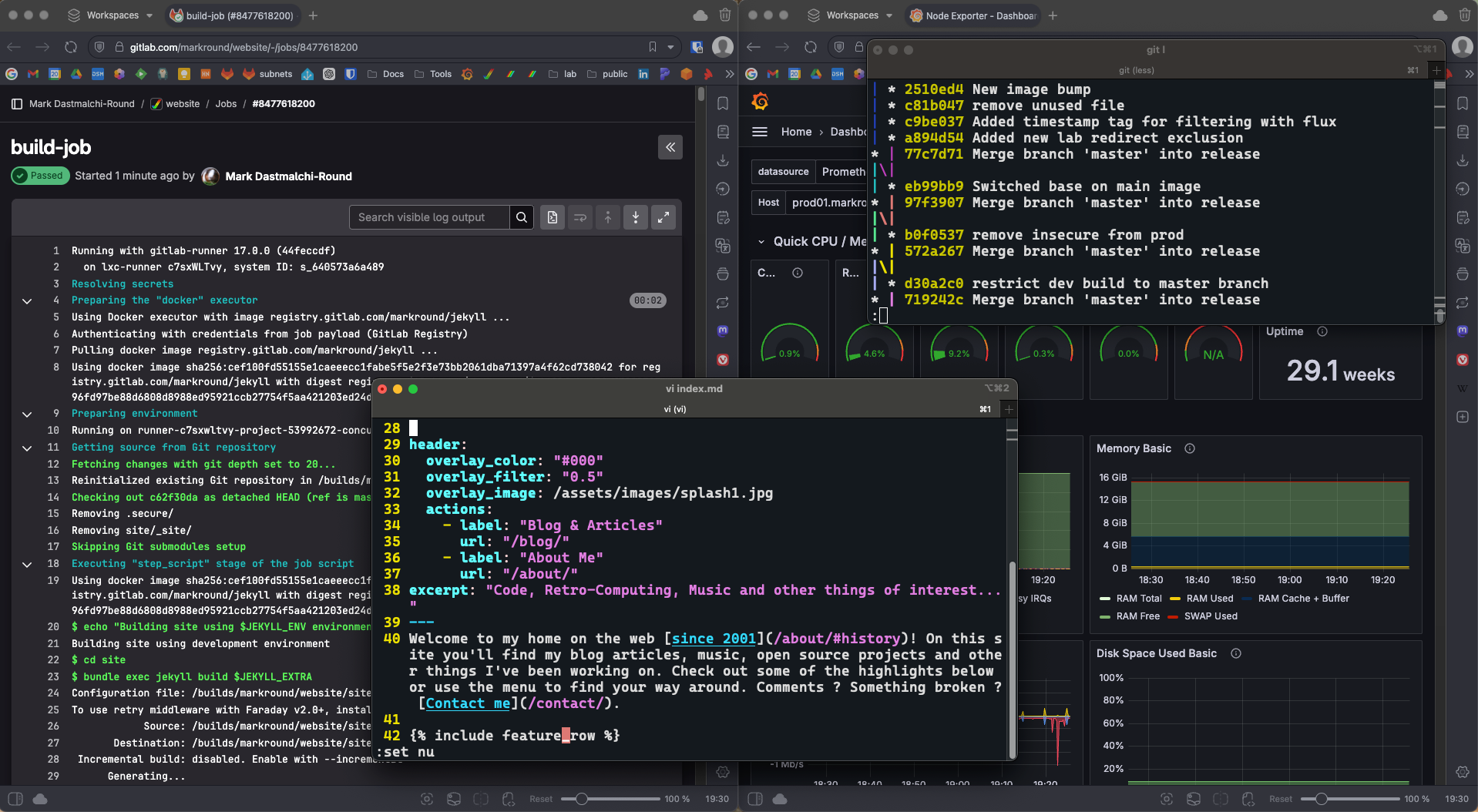
This site is now managed and deployed in the same kind of way I now advocate for my customers: The website and project infrastructure is all expressed as code and generally runs through CI/CD pipelines that pave infrastructure with Terraform and Ansible, deploy containers using GitOps and so on. All I have to do to publish a post now is make a git commit, or push a branch to production.
The whole thing including control plane, networking and monitoring - and all my projects infrastructure across 3 continents - can be torn down and recreated in minutes with a single click. Even the old Solaris die-hard in me has to admit this is just awesome and despite the challenges of the current cloud-native IT world, it sure beats hand-rolling mod_perl clusters!
What’s Next ?
It’s often said that once something is on the Internet, it never truly disappears. Whilst some of my earliest “digital footprints” can be sometimes embarrassing or cringe-inducing, I’m glad that they’ve been preserved. My older content is simply the views and opinions framed through the experience of a younger person. Although my sentiments may have changed, and I now see some of my old writing and artistic creations as flawed, they’re an honest reflection of where and who I was.
From a personal point of view, it’s great to look back and remember everything from wrestling with broken ZIP drives at University to jobs, colleagues and friends I’ve made over the years. And it’s nothing short of breath-taking to see the pace of change in our industry and remember all the once new and trendy tech stacks that have come and gone. Remember - “this too shall pass”.
I wonder what this site will look like, and what it will be running on when I (hopefully) stop and take my next look back in another 25 years ? See you in 2051…
The opinions and views expressed on this website are my own and do not necessarily reflect the views of my employer, past or present.